

Located on Şehzadebaşı Avenue opposite the Istanbul Municipality Palace, this famous mosque was commissioned by Suleiman the Magnificent from Mimar Sinan for his son Şehzade Mehmet, who died young.
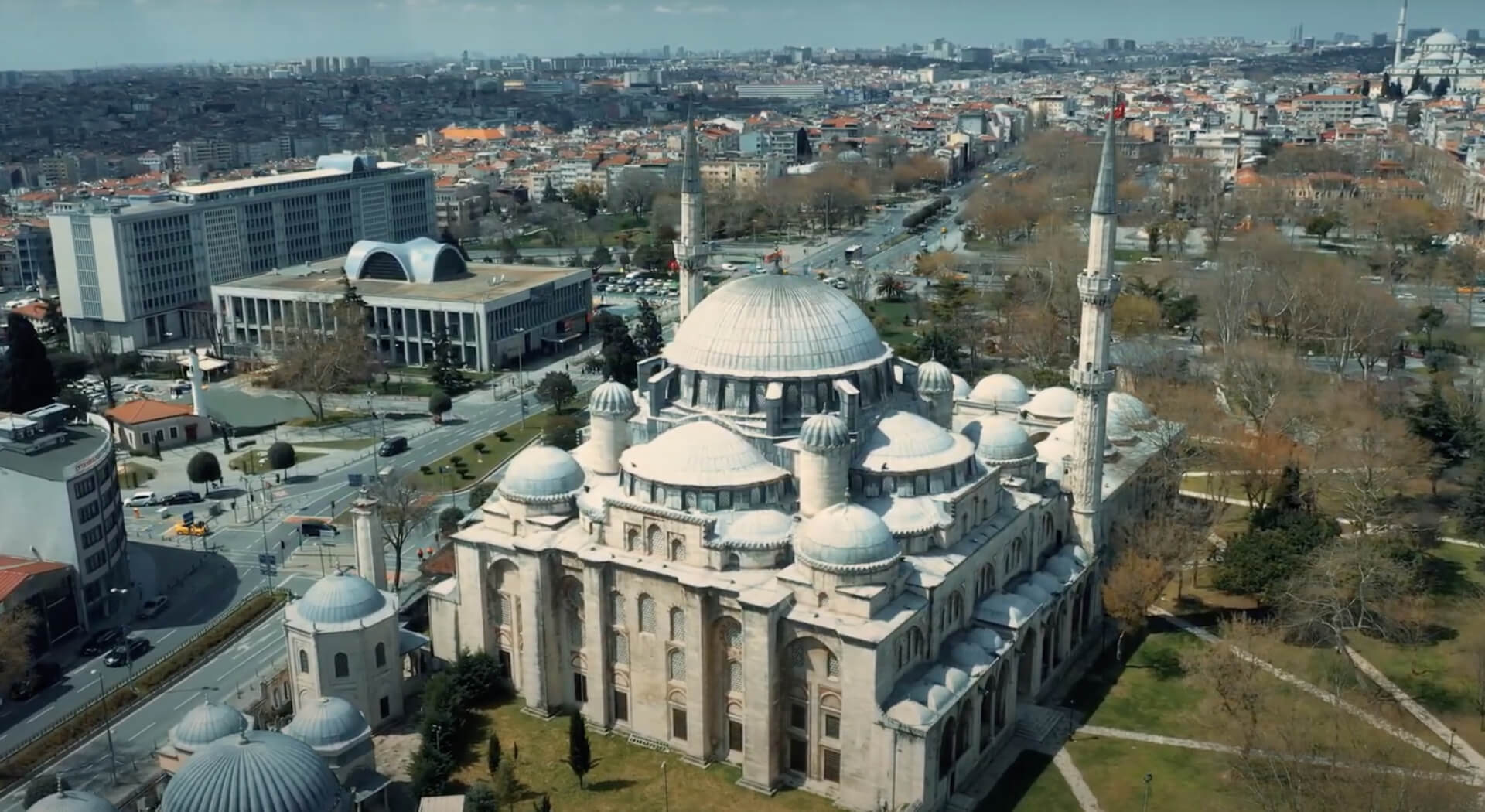
Şehzade Mosque and Complex
Located in the Kalenderhane neighbourhood at number 70 on Şehzadebaşı Avenue, opposite the Istanbul Municipality Palace, this famous mosque was commissioned by Suleiman the Magnificent from Mimar Sinan for his son Şehzade Mehmet, who died young. The Şehzade Mosque is part of a large complex.
The complex consists of the mosque as well as a soup kitchen, guesthouse, madrasas and schools. The soup kitchen, used today as a dispensary, and the school are outside the courtyard, while the mosque, madrasa, guesthouse and tombs are surrounded by a courtyard. The walls of the courtyard, entered through five gates, have windows.
Construction of the Şehzade Mosque began in 1543 and was completed in 1548. The square-plan mosque is covered by a central dome 18.42 metres in diameter and four large half-domes that complete the effect of this dome. The large dome rests on four elephant-foot piers, and there is a small dome at each of the four corners of the mosque.
The sultan's lodge is on the left side of the prayer hall, on columns. The minbar and mihrab are made of pure marble with masterful craftsmanship and decorated with latticed railings. The muezzin's gallery, set on eight columns, also stands out as a great work of art. The mosque has three separate doors. Above the main door in the centre is an inscription reading "Mabed-i Ümmet-i Resûl-i Mûbin - year 955".
The courtyard of the mosque is surrounded by 16 domes resting on 12 columns. The hand-painted decorations of the courtyard are exquisite. The ablution fountain in the middle of the courtyard draws attention with its elegant craftsmanship.
On the right and left sides of the mosque are two minarets with two balconies each, displaying the mastery of Mimar Sinan. Each minaret is carefully worked with different motifs.
The cemetery of the Şehzade Mosque contains many tombs. Among them, the Tomb of Şehzade Mehmet in particular is a monument made by Mimar Sinan with great care in terms of ornament and decoration. Built on an octagonal plan, the tomb has lower and upper windows on each façade. According to tradition, a throne was placed on the tomb as a blessing.
To the left of the Tomb of Şehzade Mehmet is the octagonal, single-domed Tomb of Rüstem Paşa, also a work of Mimar Sinan. The cemetery also contains tombs belonging to figures such as Şehzade Mahmut, Hatice Sultan, Fatma Sultan and İbrahim Paşa.


