

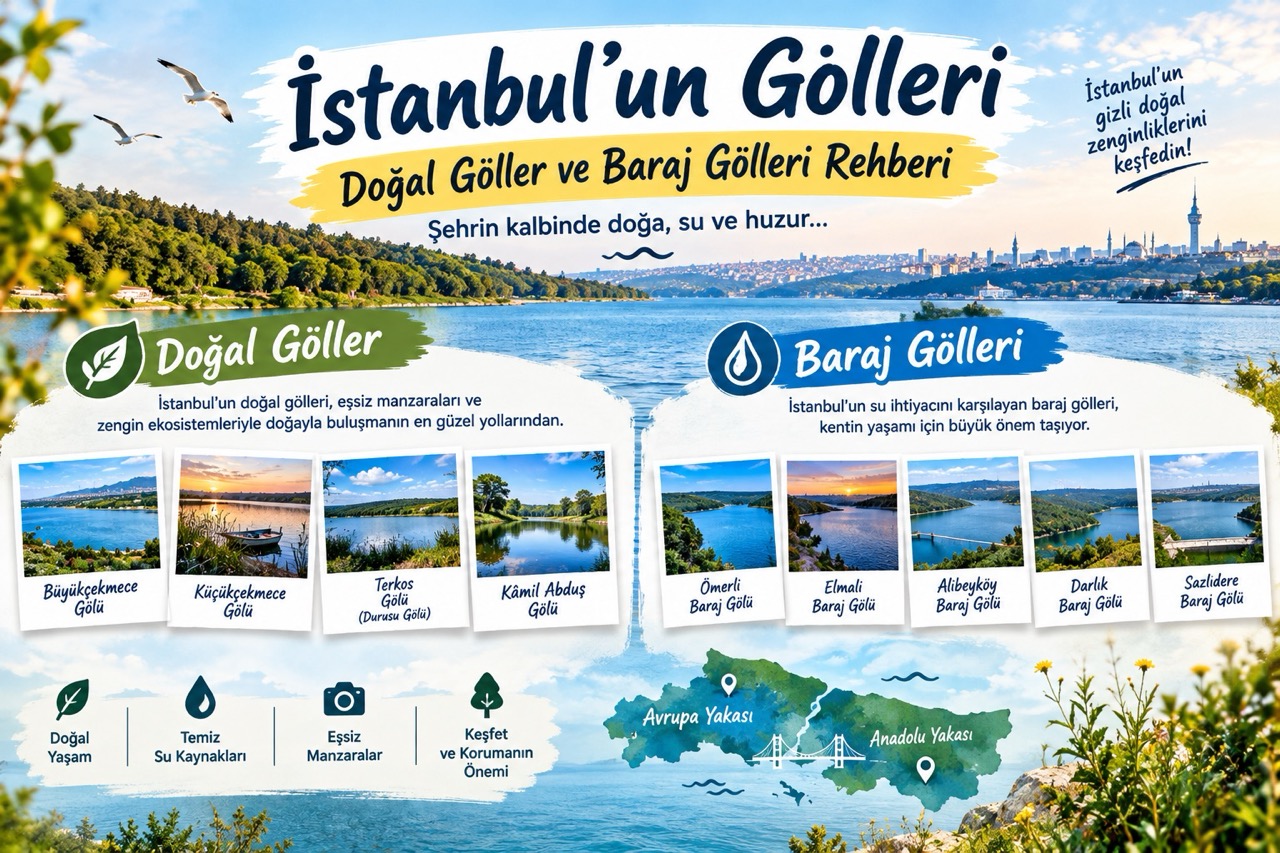
When people think of Istanbul, they usually picture the Bosphorus, historic landmarks, bustling streets, and ferry rides. However, Istanbul is also home to several natural lakes and reservoirs that play an important role in the city’s water supply, biodiversity, and natural landscape.
Four notable natural lakes are Büyükçekmece Lake, Küçükçekmece Lake, Terkos Lake, and Kâmil Abduş Lake. In addition, reservoirs such as Ömerli, Elmalı, Alibeyköy, Darlık, and Sazlıdere are essential parts of Istanbul’s water management system.
Where are these lakes located, and what makes each one special? Here is a guide to Istanbul’s natural lakes and reservoirs.
Istanbul’s natural lakes vary in size, location, and ecological characteristics. Some are known for their wide waterfront landscapes, while others are particularly important for wetlands and wildlife.
Located in the western part of Istanbul, Büyükçekmece Lake is one of the city’s best-known lakes. Close to the Sea of Marmara, it features a broad water surface and a shoreline surrounded by residential areas.
The lake and its surroundings provide habitats for waterbirds and other wildlife. The area is also associated with Istanbul’s water infrastructure, making it important to distinguish the natural lake from the reservoir system connected to it.
With its distinctive coastal landscape, Büyükçekmece Lake is an important geographical feature of western Istanbul.
Situated between the Küçükçekmece and Avcılar districts on Istanbul’s European side, Küçükçekmece Lake is one of the city’s most significant natural water bodies.
The lake stretches for approximately 10 kilometers and is notable for its broad shoreline and urban surroundings. Despite the development around it, the area remains important for understanding Istanbul’s natural environment.
Küçükçekmece Lake is also of historical and archaeological interest. Research in the surrounding area has revealed evidence that helps explain past settlements and ways of life in the region.
Today, the lake offers a different perspective on Istanbul, where urban neighborhoods meet water and natural habitats. However, urban development and environmental pressures make the protection of its ecosystem increasingly important.
Located in the Çatalca area in northwestern Istanbul, Terkos Lake is also known as Durusu Lake. It is one of the city’s most important water sources and is surrounded by wetlands and natural habitats.
The lake and its surrounding environment support various bird species and aquatic plants. For visitors interested in Istanbul’s northern landscapes, the area presents a striking contrast to the densely built-up city center.
Terkos Lake also plays a major role in Istanbul’s drinking water supply. Protecting the lake and its catchment area is essential for both wildlife conservation and the city’s long-term water security.
Located in Tuzla on Istanbul’s Asian side, Kâmil Abduş Lake is a lesser-known natural area within the city. Its wetland characteristics make it an interesting part of Istanbul’s natural environment.
Surrounded by the coastal and urban landscape of Tuzla, the lake reminds us that Istanbul’s natural heritage extends beyond the forests and large water bodies in the northern parts of the city.
Protecting the lake’s ecological value requires preventing pollution and preserving the natural characteristics of its wetland environment.
Reservoirs are essential to Istanbul’s water supply system. They store water collected during rainy periods and help provide water when it is needed.
Some of the most notable reservoirs in Istanbul include the following.
Located on the Asian side of Istanbul, Ömerli Reservoir is one of the city’s major drinking water sources. It plays an important role in supplying water to the eastern parts of the metropolitan area and beyond.
Its extensive catchment area contributes to Istanbul’s water supply, while the surrounding landscape includes natural areas that need protection.
Preserving the reservoir’s catchment area is vital for maintaining water quality. Preventing pollution and following environmental regulations are essential for protecting this important resource.
Elmalı Reservoir, located on Istanbul’s Asian side, is one of the long-standing components of the city’s drinking water infrastructure.
Although smaller than some of Istanbul’s other reservoirs, Elmalı remains part of the wider water supply system. Protecting the reservoir and its catchment area is important for maintaining water quality and supporting sustainable water management.
Located on the European side of Istanbul, Alibeyköy Reservoir is another component of the city’s drinking water system. The reservoir is associated with the Eyüpsultan area and its surrounding water catchment.
Its location near developed urban areas highlights the importance of protecting water resources from environmental pressures.
Alibeyköy Reservoir is a reminder that maintaining Istanbul’s water supply depends not only on infrastructure but also on responsible land use and environmental protection.
Darlık Reservoir is located in the Şile area of Istanbul and is an important water source on the city’s Asian side. It was built on Darlık Creek to support drinking water supply.
Situated away from Istanbul’s central districts, the surrounding area offers a glimpse of the city’s more rural and natural landscapes.
Protecting the reservoir’s catchment area is essential for water security and environmental conservation. Responsible land use helps preserve the natural character of the region.
Located on Istanbul’s European side, Sazlıdere Reservoir is another water source that forms part of the city’s drinking water infrastructure.
The reservoir is connected to the wider water system around Küçükçekmece and plays a role in Istanbul’s water management.
As with other reservoirs, protecting Sazlıdere and its catchment area is important for maintaining water quality. Land use, construction, and other environmental changes in the surrounding area can have implications for the long-term protection of water resources.
Istanbul’s lakes and reservoirs are much more than scenic bodies of water. They perform several important functions for the city and its natural environment.
Here are some of their main benefits:
Some lakes in Istanbul are close to residential neighborhoods, while others are located within protected areas or regulated water catchments. It is important not to assume that every shoreline is freely accessible or suitable for picnics.
Before visiting, check local access rules and restrictions. Swimming, entering the water, lighting fires, or accessing certain areas may be prohibited, particularly around drinking water reservoirs.
Visitors should also avoid leaving rubbish behind, disturbing wildlife, or damaging natural vegetation. Respecting these rules helps preserve the lakes for future generations.
Istanbul’s natural lakes and reservoirs reveal a different side of the city, beyond its famous waterfront, historic monuments, and lively neighborhoods.
Büyükçekmece Lake, Küçükçekmece Lake, Terkos Lake, and Kâmil Abduş Lake are notable natural water bodies, while Ömerli, Elmalı, Alibeyköy, Darlık, and Sazlıdere reservoirs play important roles in the city’s water supply.
Learning about these places helps visitors and residents better understand Istanbul’s natural environment and the importance of protecting its water resources.
As you explore Istanbul’s natural beauty, remember that protecting its lakes and reservoirs is a shared responsibility.


